
Free URL QR Code Generator
Turn any website link into a scannable QR code. Works with any URL — landing pages, app store links, documents, and portfolios. Free SVG and PNG export, no signup.
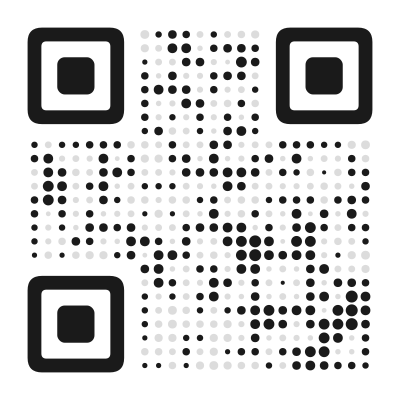
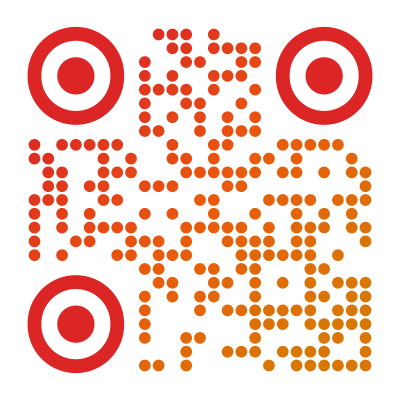
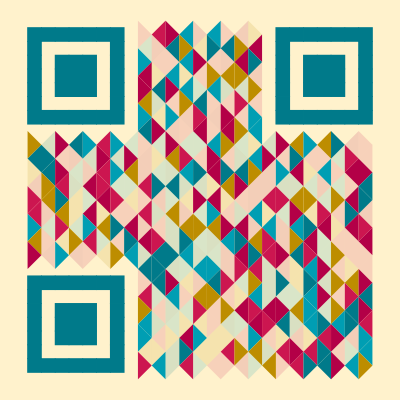
Example QR Code Designs
Click any design to create your own QR code

What Is a URL QR Code?
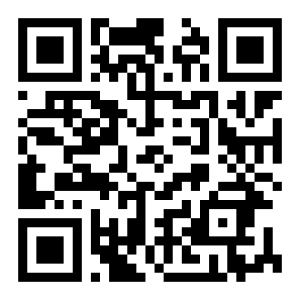
A URL QR code is the most common type of QR code. It encodes a website address into a scannable pattern — when someone points their phone camera at it, the link opens instantly. No typing, no searching, no “was that .com or .io?” confusion.
Every QR code you see on a poster, product, or packaging that opens a website is a URL QR code. It is the bridge between the physical world and the web.
How to Create a URL QR Code
- Open the QR code designer and paste your website URL
- Pick a module style, colors, and optionally add your logo to make the code match your brand
- Preview the QR code live as you make changes
- Download as SVG (vector, perfect for print at any size) or PNG (for digital use)
- Place the QR code on your print materials, packaging, screens, or signage
Done in under a minute. No signup required.
Where to Use a URL QR Code
- Landing pages and campaigns — print QR codes on flyers, ads, or direct mail that link to campaign-specific landing pages. Track which print materials drive traffic.
- Product packaging — link to manuals, setup guides, warranty registration, or ingredient lists. Keep the packaging clean while offering detailed information.
- Document downloads — link to PDF manuals, catalogs, price lists, or spec sheets. Useful on trade show materials or product inserts.
- App store links — print QR codes on marketing materials that link directly to your app’s download page on the App Store or Google Play.
- Portfolio and resume websites — add a QR code to your printed resume, business card back, or portfolio cover linking to your personal site.
- Digital menus — link to the full online menu, daily specials, or a reservation page. Print the QR code on table tents or window signage.
UTM Parameters and QR Code Tracking
UTM parameters are tags you append to a URL to track where your QR code traffic comes from. They look like this:
https://example.com/landing?utm_source=flyer&utm_medium=qr&utm_campaign=spring2025Add them to your URL before generating the QR code. The three that matter most for QR codes:
- utm_source — identifies where the QR code is printed (flyer, poster, packaging, business-card)
- utm_medium — always set to
qrso you can filter all QR traffic in your analytics - utm_campaign — the campaign name (spring2025, product-launch, trade-show-berlin)
Google Analytics, Plausible, Matomo, and most other analytics tools recognize UTM parameters automatically — no extra configuration needed. You will see exactly which printed materials drive visits.
One trade-off: UTM parameters make the URL longer, which produces a denser QR code. If the full URL exceeds roughly 100 characters, consider using a URL shortener that preserves UTMs (most do). That keeps the QR code simple and scannable.
URL Shorteners and QR Codes
Long URLs with deep paths or tracking parameters produce dense, hard-to-scan QR codes. A URL shortener solves this by replacing the full URL with a short redirect link.
When to use a shortener:
- The URL contains multiple query parameters or deep folder paths
- The QR code needs to be printed at a small size
- You want cleaner analytics (some shorteners offer their own click tracking)
When NOT to use one:
- Your domain is already short (e.g.,
acme.io/menu) — shortening gains nothing - The shortener adds extra redirects that slow down page loading on mobile
- You are encoding a non-HTTP format (WiFi, vCard, email) — shorteners only work with web URLs
Reliability matters. If the shortening service goes down or shuts down, every QR code pointing to it breaks permanently. For anything printed long-term, use redirect rules on your own domain (e.g., yourdomain.com/go/spring) instead of a third-party shortener.
Popular options: bit.ly (free tier available), short.io (custom domains), or a simple redirect rule in your web server or DNS provider.
Choosing the Right URL
The URL you encode matters more than you might think:
Use https://. Always start with https:// for security and compatibility. Some QR readers may not open plain http:// links.
Keep it short. A shorter URL produces a simpler, less dense QR code that scans faster and works better at small sizes. If your URL is long (tracking parameters, deep paths), use a URL shortener first.
Use a stable URL. A static QR code cannot be changed after printing. Point to a URL you control and that will not change. Avoid linking to temporary pages, campaign URLs that expire, or third-party platforms that might restructure their URLs.
Consider a landing page. Instead of linking directly to your homepage, create a dedicated landing page for QR code visitors. This lets you track scans, tailor the message, and provide a mobile-optimized experience.
Static vs. Dynamic URL QR Codes
A static QR code encodes the URL directly in the pattern. It works forever, needs no server, and is completely free. The downside: you cannot change the URL after printing.
A dynamic QR code encodes a short redirect URL that you can update at any time. Printed the wrong link? Change it without reprinting. Want scan analytics? Dynamic codes track every scan. The trade-off: dynamic codes require a server to handle the redirect.
Our free generator creates static QR codes — perfect for links you know will not change. For a full comparison, see Static vs Dynamic QR Codes.
Tips for Better URL QR Codes
Test before printing. Always scan your QR code with at least two different phones before sending it to print. Confirm the correct URL opens.
Mind the size. A URL QR code should be at least 2cm x 2cm (0.8” x 0.8”) for reliable scanning. Larger is better, especially for posters and signage that will be scanned from a distance.
Add a call to action. A QR code alone does not tell people what to expect. Add text like “Scan for menu”, “Visit our website”, or “Register here” near the code.
Download as SVG for print. SVG files are vector-based — they scale to any size without losing quality. Use PNG only for screens.
Found this useful?
Share it with someone who needs it.
Frequently Asked Questions
?
What is a URL QR code?
A URL QR code encodes a website link. When someone scans it, their phone opens the link instantly — no typing required.
?
Is this URL QR code generator free?
Yes, completely free. Any valid URL works — websites, landing pages, documents, and app store links. No signup, no watermark, no download limits.
?
Do URL QR codes expire?
No. The URL is embedded directly in the QR pattern and works forever. The only risk is if the destination page is moved or taken down — use a permanent URL, not a temporary redirect or campaign link that might change.
?
Can I change the URL after printing?
Not with a static QR code — the URL is fixed. If you need to update the destination later, use a dynamic QR code with a redirect link.
?
What URL formats are supported?
Any valid web URL works: https://, http://, and even deep links. Make sure the URL starts with https:// for best compatibility.
?
How long can the URL be?
Shorter URLs produce simpler, more scannable QR codes. If your URL is very long, use a URL shortener first — it'll make the QR code easier to scan.
?
Does it work on both iPhone and Android?
Yes. URL QR codes use the most universally supported format. Every smartphone camera app, every QR scanner app, and every platform recognizes them. No special app or configuration needed.
Ready to Create Your QR Code?
45+ artistic styles, free SVG export, no signup needed.
Create Your QR Code →